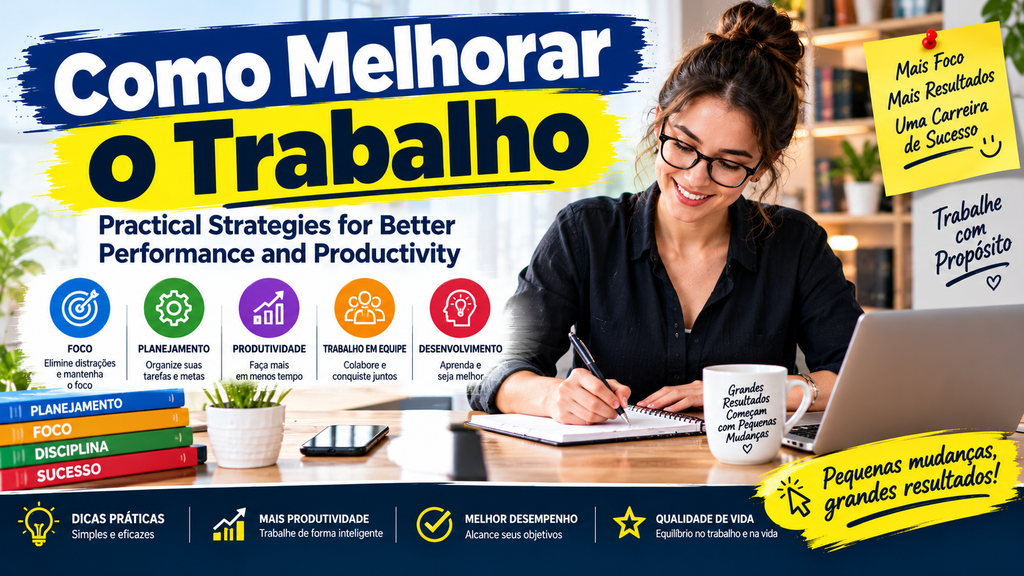

Improving the way we work is an important goal for employees, professionals, business owners, and students. In today’s competitive environment, simply working harder is not always enough. It is often more effective to work smarter, organize responsibilities, communicate clearly, and continuously develop useful skills. The “Como Melhorar o Trabalho” means “how to improve work,” and it reflects a common desire to achieve better results while using time and energy more effectively.
Whether you want to improve individual performance, teamwork, productivity, or the quality of your professional results, several practical strategies can make a meaningful difference. Below are some of the most effective ways to improve work and create a more productive professional routine.
Set Clear Goals
The first step in improving work is knowing exactly what you want to achieve. Without clear goals, it can be difficult to decide which tasks deserve attention and which activities can wait.
Set specific, realistic, and measurable objectives. Instead of saying, “I want to work better,” define a goal such as completing a particular project by a certain date or reducing the time required for a repetitive task.
Clear goals provide direction and make it easier to measure progress. They also help employees stay motivated because they can see what they are working toward.
Organize Your Tasks
Good organization can significantly improve professional performance. At the beginning of each day or week, create a list of important responsibilities.
Divide larger projects into smaller tasks. This makes complicated work easier to manage and reduces the feeling of being overwhelmed.
A useful approach is to categorize tasks according to their importance and urgency. Complete high-priority responsibilities first and avoid spending too much time on activities that have little impact on your main objectives.
Improve Time Management
Time is one of the most valuable resources in any workplace. Poor time management can lead to missed deadlines, stress, and lower-quality results.
Try allocating specific periods for different activities. Avoid constantly switching between tasks because frequent interruptions can reduce concentration.
Techniques such as time blocking, prioritization, and short scheduled breaks can help employees maintain focus. It is also useful to identify activities that consume time without producing meaningful results.
Develop Better Communication
Communication plays an essential role in successful work. Misunderstandings can cause delays, mistakes, and unnecessary conflicts.
When communicating with colleagues or managers, be clear and direct. Listen carefully before responding, and ask questions when instructions are unclear.
Written communication should also be organized and easy to understand. Good communication helps teams coordinate responsibilities and ensures that everyone understands deadlines, expectations, and objectives.
Learn New Skills
Professional improvement requires continuous learning. Industries, technologies, and workplace expectations are constantly changing, so developing new skills can help you remain effective.
Identify the skills that are most valuable for your role. These may include technical knowledge, communication, leadership, problem-solving, digital skills, or project management.
Online courses, books, workshops, professional training, and practical experience can all contribute to career development. Learning should be viewed as an ongoing process rather than something that ends after formal education.
Use Technology Wisely
Technology can make work faster and more efficient when used correctly. Digital calendars, task-management applications, communication platforms, automation tools, and document-management systems can reduce repetitive work.
However, technology can also become a distraction. Constant notifications, unnecessary meetings, and excessive social media use can reduce productivity.
Choose tools that genuinely solve problems instead of using technology simply because it is available. The best tools should make your workflow simpler rather than more complicated.
Create a Comfortable Work Environment
The environment in which you work can influence concentration and productivity. A clean, organized, and comfortable workspace can make it easier to focus.
Keep essential materials within reach and remove unnecessary distractions. If possible, make sure your workspace has appropriate lighting, comfortable seating, and enough space for your equipment.
For remote workers, establishing a dedicated work area can also help create a clear separation between professional responsibilities and personal activities.
Take Regular Breaks
Working continuously for long periods does not necessarily produce better results. Regular breaks can help maintain concentration and reduce mental fatigue.
After completing a focused period of work, take a short break. Stand up, stretch, walk around, drink water, or briefly step away from the screen.
Breaks should support productivity rather than become long distractions. The goal is to return to work feeling refreshed and ready to concentrate again.
Ask for Feedback
Feedback is one of the most useful ways to identify opportunities for improvement. Sometimes other people notice problems or strengths that we cannot see ourselves.
Ask managers, colleagues, or clients for constructive feedback when appropriate. Instead of becoming defensive about criticism, consider what can be learned from it.
Useful feedback can reveal weaknesses in communication, organization, technical performance, or teamwork. It can also confirm which areas you are already doing well.
Reduce Distractions
Distractions can have a major effect on productivity. Mobile phones, unnecessary notifications, social media, unrelated conversations, and frequent email checking can interrupt concentration.
Consider turning off nonessential notifications while completing important tasks. Set specific times for checking email and messages instead of responding immediately to every alert.
Creating periods of uninterrupted focus can help you complete demanding work more efficiently and with fewer errors.
Improve Teamwork
Many professional tasks require collaboration. Strong teamwork can improve creativity, problem-solving, and overall results.
Respect the ideas of other team members and make sure responsibilities are clearly assigned. Everyone should understand what they are responsible for and how their work contributes to the larger project.
Successful teamwork also requires reliability. Completing your responsibilities on time makes it easier for other people to complete theirs.
Maintain a Healthy Routine
Physical and mental well-being can influence professional performance. Adequate sleep, regular physical activity, nutritious food, and sufficient hydration can support energy and concentration.
Stress should also be managed before it becomes overwhelming. Simple habits such as taking breaks, exercising, spending time away from screens, and maintaining reasonable working hours can support a healthier routine.
A productive professional life should not require constant exhaustion. Sustainable performance is generally more valuable than short periods of extreme effort.
Learn From Mistakes
Mistakes are a natural part of professional development. Instead of simply trying to avoid every mistake, analyze what caused it and how it can be prevented in the future.
When something goes wrong, ask several questions: What happened? Why did it happen? What could have been done differently? What process can be changed?
This approach transforms mistakes into learning opportunities and can lead to better systems and stronger professional skills.
Review Your Progress
Improvement requires regular evaluation. At the end of each week or month, review your accomplishments and identify areas that need attention.
Consider which goals were completed, which tasks took longer than expected, and which distractions affected your productivity.
Regular reviews make it possible to adjust your strategy. You do not need to completely change your routine at once. Small improvements made consistently can produce significant results over time.
Build a Continuous Improvement Mindset
The most effective approach to como melhorar o trabalho is to view improvement as an ongoing process. There is rarely one perfect method that works for everyone.
Experiment with different strategies and observe what produces better results. Improve one area at a time, such as time management, communication, organization, or technical skills.
Small daily improvements can eventually create major changes in professional performance. The objective is not simply to do more work but to produce better results with greater efficiency, focus, and satisfaction.
Conclusion
Knowing como melhorar o trabalho involves more than simply increasing the number of hours you work. True improvement comes from setting clear goals, organizing responsibilities, managing time effectively, communicating well, learning new skills, reducing distractions, and maintaining a healthy routine.
Technology and productivity techniques can provide useful support, but personal discipline and continuous learning remain essential. By reviewing your progress and making small, consistent adjustments, you can develop a more efficient and rewarding way of working.
The key is to focus on quality as well as quantity. When you understand your priorities, manage your resources wisely, and remain open to learning, you can steadily improve your performance and achieve stronger professional results.